What's going on in Mr. Solarz' Class?
  • Parent (Current Newsletter)
    • Additional Parent Resources >
      • Homework Guidance for Parents
      • WEX - Writer's Express
      • Our Classroom YouTube Page
      • Should I grade homework?
      • Articles that Explain my Philosophy of Teaching
      • Parents Supporting 21st Century Learning
    • Daily Photo Journal >
      • 2014-2015 DaIly Photo Journal
      • 2013-2014 Daily Photo Journal
      • 2012-2013 Daily Photo Journal
    • Tentative Schedule this Week
    • Parent-Teacher Conference Schedule
    • Monitoring Your Child's Progress in Spelling
    • Calendar
    • Printables
    • 21st Century Skills
    • Westgate Social Work
    • Bessie's Table Soup Kitchen
  • Students
    • Overflow Roll-Out >
      • Contests You Can Enter!
      • Student Quotes
      • Websites to Visit for Homework!
      • REARJMCL
    • Calendar
    • Mini-Lessons
    • I Never Knew That!
    • History Alive! >
      • Sign-In Page
      • Online Tutorial
      • History Alive 10 Quiz
    • Spelling
  • Educators
    • Mr. Solarz' ePortfolio >
      • Teacher Evaluation
      • Domain3
      • Domain4
      • My Digital Scrapbook
      • Finland
    • Workshops I've Led >
      • How to Set Up and Run a Mystery Skype Session
      • Creating Your 21st Century Classroom
      • Twitter for Educators
      • Leading Children to Pursue their Passions
      • Becoming a Global Classroom Through Mystery Skypes
      • Enriched Learning Projects
      • Developing Units with 21st Century Skills in Mind
      • Who Owns the Learning? Examples of 5th Graders Running the Show
      • A Brief Introduction to China (for 2nd Graders)
    • 21st Century Learning >
      • Resources for Teachers >
        • 21st Century Skills
        • The 21st Century Skill Series of Videos
      • Examples of 21st Century Education in Action >
        • Self-Directed Students
      • 21st Century Assessment
      • Web 2.0 Tools Used in Our Classroom
      • Articles for 21st Century Teaching (Updated Daily)
      • Motivational Speakers
    • Curricular Units >
      • Social Studies Units >
        • The 2012 Presidential Election
        • The Revolutionary War
        • U.S. Constitution and Government
        • Westward Movement
      • Science Units >
        • Energy
        • Science Fair
        • Human Body Systems in Motion
        • Human Body Systems in Motion
        • Watery Earth
    • EdChat Archives >
      • #TLAP
      • #5thchat
      • #21stedchat
    • My Philosophy of Education
    • Tips and Tricks for the Elementary Classroom
    • China (Photos)
  • Past
    • 2013-2014 >
      • Year-Long Activities >
        • Passion Time >
          • Passion Projects >
            • 2013-2014 Passion Projects >
              • Passion Projects 10/11/13
              • Passion Projects 11/22/13
              • Passion Projects 12/20/13
              • Passion Projects 2/12/14
              • Passion Projects 3/21/14
              • Passion Projects 5/2/14
              • Passion Projects 6/2/14
            • 2012-2013 Passion Projects >
              • Passion Projects 1
              • Passion Projects 2
          • Guidelines for Creating Your Final Product
        • New Assignments
        • Mystery Skype
        • Literature Circles >
          • Discussions & Signposts
          • Book Talks >
            • Submit Your YouTube URL Here
      • Spring Trimester >
        • Our Learning Experiences
        • Westward Expansion >
          • Oregon Trail Pastimes
          • VoiceThread Blog
          • Pinterest
          • VoiceThread
          • Timeline
          • Diigo
          • Google Presentation
          • Photo Stories
          • Tableaux Vivants
          • Daily Travel Log
          • Fictional Travel Log
          • Video Journal
        • WEX - Fictional Narratives
        • 21st Century Skills
        • Motivational Posters
        • Watery Earth >
          • Bodies of Water
        • Colonize Mars! >
          • Claiming Mars For Ourselves
      • Winter Trimester >
        • 100 Word Challenge
        • Stations
        • Human Body Unit
        • Out Of My Mind
      • Fall Trimester >
        • Historical Reenactment
        • Tessellations
    • 2012-2013 >
      • April/May/June >
        • Mystery Skype
        • Colonize Mars!
        • Science Fair 2013
      • February/March >
        • ThingLink
        • Human Body
        • Revolutionary War Simulation
        • Global Literature Circles
        • ISAT Test Prep
      • January >
        • Field Museum
        • Wonder >
          • Character Analyses
          • Teacher Notes for Wonder - R.J. Palacio
        • Google Groups
      • November/December >
        • 12/12/12
        • Energy Debates >
          • Energy Debates Videos!
          • Energy Debate Blog Template
        • Presidential Elections >
          • The 2012 Presidential Election
          • Presidential Election Glogs
          • Presidential Character Traits
          • Political Parties >
            • Democratic Party
            • Republican Party
            • Green Party
            • Constitution Party
            • Libertarian Party
          • Virtual Debate >
            • Education
            • Health Care
            • Social Security
            • Immigration
          • Infographic Lessons on Prezi
          • Political Polls
          • ELECTION TIME!!!
      • October >
        • Creating Your Class Badges Account
        • Properties of Quadrilaterals
        • WEX Lesson 33 - Human Sculptures
        • Energy
        • 10-11-12 What's Special About It?
        • Mr. Badynee's 50th Birthday!
      • September >
        • Constitution Day - September 17, 2012
        • Character Traits Thesaurus
        • Mad Libs!!!
        • Grammar
    • 2011-2012 >
      • May/June >
        • Science Experiments >
          • Marble Coasters
          • Bubble Busters
          • Geodes
          • Naked Egg Drop
        • Oregon Trail >
          • Reflection Activities >
            • Pinterest
            • Voice Thread/Garage Band
            • Timeline of Events
            • Diigo
            • Google Presentation
            • Photo Album
            • Tableaux Vivants
            • Video Updates
            • Daily Travel Log
            • The "Very Unrealistic Accounts" of our trip west
          • Miscellaneous >
            • Audio ThingLink Map
            • Passtimes/Games/Songs
        • Niche Theory
        • The 5 Love Languages
        • Pool Party
        • History Alive 17
        • Field Day
      • March/April >
        • Phantom Tollbooth >
          • Homework >
            • HW Due 5/3/12 by 4:00 p.m.
            • HW Due 5/14/12 by 4:00 p.m.
            • Character Forum
            • New Characters
            • New Settings
          • Roles >
            • 1 - Detail Tracker
            • 2 - Psychologist
            • 3 - Professor
            • 4 - Philosopher
            • 5 - Cartographer
        • Human Body >
          • Human Body Posters (Pre-Assessment)
          • Human Body Lessons >
            • Heart Rate Graphs
            • Exercise Graph
            • Clothespin Lesson
            • Creating Aliens
            • Hinge Joint Videos
          • How to Write a Reflection
          • Final Assessment & Reflection
        • WEX Fictional Narratives >
          • Sticky Podcasting
          • Podcasts
          • Writing Picture Books
        • Project Citizen: Westgate Database
        • Arbor Day
        • Zero Degree Party!
        • Judge Tristano Visit
      • January/February >
        • Kate Klise Assembly
        • Lara in "Annie"
        • Glogster Project
        • Science Fair
        • Valentine's Day Party
        • Teacher Appreciation Week
      • November/December >
        • Chinese Calligraphy
        • Energy
        • Energy Debates
      • September/October >
        • Rev. War Hero Projects
        • Stations
        • Halloween Party
        • Fall Links
      • Videos
  • Present
    • Passion Time >
      • Passion Time Steps
      • Submit Your Essential Question
      • Essential Questions
      • How to Post Your Passion Project Online
    • 2014-2015 Miscellaneous
    • Energy
    • Wonder
    • Grammar
  • Future
    • Learning About 21st Century Skills
    • Creating Infographics
    • Utilizing the Left and Right Sides of Your Brain
    • Comments 4 Kids
    • Innovation in the Classroom
    • Online Quizzes and Polls
    • Solar Maximum
    • Vocabulary/Parts of Speech
    • The Five Things I've Learned
    • Vialogues (Video Discussions)
    • Creating Online Videos
    • Advanced Storytelling
    • Test Anxiety
    • Responding to Blog Entries
    • Writer's Workshop Blog
    • Recipe Project (Blog)
  • e-Portfolios
    • 2014-2015 Students >
      • Student ePortfolios 0-7 >
        • 1 - Michael
        • 2 - Charlie
        • 3 - Nicole
        • 4 - Stacy
        • 5 - Bela
        • 6 - Kendall
        • 7 - Demetri
      • Student ePortfolios 8-14 >
        • 8 - Emily
        • 9 - Nicky
        • 10 - Hanna
        • 11 - Payton
        • 12 - Hasanain
        • 13 - Tucker
        • 14 - Chris
      • Student ePortfolios 15-21 >
        • 15 - Madi
        • 16 - Aidan
        • 17 - Luke
        • 18 - Kaela
        • 19 - Ryan
        • 20 - Alison
        • 21 - Lucas
    • 2013-2014 Students >
      • Student ePortfolios 0-9 >
        • 0 - Mr. Solarz' Sample Portfolio
        • 1 - Anthony A.
        • 2 - Annie B.
        • 3 - Sadie D.
        • 4 - Ellie D.
        • 5 - Sam D.
        • 6 - Ed D.
        • 7 - Luke D.
        • 8 - Keegan D.
        • 9 - Sean G.
      • Student ePortfolios 10-18 >
        • 10 - David K.
        • 11 - Ethan K.
        • 12 - Sam K.
        • 13 - Abby K.
        • 14 - Justin L.
        • 15 - Jill L.
        • 16 - Giana M.
        • 17 - Charlotte O.
        • 18 - Jack S.
      • Student ePortfolios 19-27 >
        • 19 - Charlie S.
        • 20 - Drew S.
        • 21 - Michael S.
        • 22 - Stefan S.
        • 23 - Charlie S.
        • 24 - Connor W.
        • 25 - Emily W.
        • 26 - Emma W.
        • 27 - Julia Z.
    • 2012-2013 Students >
      • Student Blogs 1-9 >
        • Blog 1
        • Blog 2
        • Blog 3
        • Blog 4
        • Blog 5
        • Blog 6
        • Blog 7
        • Blog 8
        • Blog 9
      • Student Blogs 10-17 >
        • Blog 10
        • Blog 11
        • Blog 12
        • Blog 13
        • Blog 14
        • Blog 15
        • Blog 16
        • Blog 17
      • Student Blogs 18-25 >
        • Blog 18
        • Blog 19
        • Blog 20
        • Blog 21
        • Blog 22
        • Blog 23
        • Blog 24
        • Blog 25
        • Blog 0
    • 2011-2012 Students >
      • Girls from 2011-2012 >
        • Gwendolyn Bennet >
          • Mars Travel Log
        • Dong Ling >
          • Mars Travel Log
        • Sophia Castro >
          • Mars Travel Log
        • Tristan Ely >
          • Mars Travel Log
        • Christine DuPont >
          • Mars Travel Log
        • Ira Matheus >
          • Mars Travel Log
        • Nicoletta Innazzo >
          • Mars Travel Log
        • Kade Bahari >
          • Mars Travel Log
        • Hava Raya >
          • Mars Travel Log
        • Kim Soo >
          • Mars Travel Log
        • Nabili Ngoumba >
          • Mars Travel Log
        • Britta Larson >
          • Mars Travel Log
        • Kristin Gola >
          • Mars Travel Log
      • Boys from 2011-2012 >
        • Dutch Vermont >
          • Mars Travel Log
        • Jose Leonardo >
          • Mars Travel Log
        • Otis Marley >
          • Mars Travel Log
        • Jose Rodriguez >
          • Mars Travel Log
        • Peter Anderson >
          • Mars Travel Log
        • Samir Bakri >
          • Mars Travel Log
        • Sefu Wellingtin >
          • Mars Travel Log
        • Raja Bello >
          • Mars Travel Log
        • Robert Gagne >
          • Mars Travel Log

Teaching and Assessing 21st Century Skills: Collaboration

9/29/2012

4 Comments

 
This is part 2 in a series - Teaching and Assessing 21st Century Skills
Collaborating with others in a group is an important skill for students in the 21st Century for many reasons.  For one,
it is largely understood that more brains are better than one!  Combining ideas and thinking about problems with different perspectives often leads to better solutions.  Another reason is that companies are asking for college graduates who can work as a contributing member of a team, bounce ideas off of each other, synthesize ideas from within a group to make fully-informed decisions, etc.  Too many recent graduates can score high grades on tests, but don't know how to work effectively with others.  It makes sense to work on that in the classroom!

I work with my students on their collaboration skills all throughout the year.  There are opportunities to work with small groups of students whenever they are:
  • participating in their literature circle (see this post),
  • working on one of our PBL simulations like our Presidential Election (see this post), and
  • partnered up randomly to accomplish a goal (see this post).

Here are some of the specific collaboration skills I try to teach my students to use while working in groups:
  • be willing to share all appropriate ideas even if you are not sure they are good or not,
  • always consider the possibilities of others' ideas even if you see some drawbacks,
  • when someone shares an idea, reflectively respond to their idea before presenting an alternate idea,
  • when disagreeing with someone's idea, start by pointing out the positives of it before sharing a criticism, and
  • always use terms like "I respectfully disagree with ____" when presenting an alternate perspective.

By learning these skills now, students will have years to practice and get comfortable collaborating with others.  They will become a valuable member of a group by learning how to be a positive leader and they will gain effective listening skills when letting others lead.

In order to assess this skill, I have taken the guidelines from the Partnership for 21st Century Skills.  They are a wonderful resource, and have graciously allowed me to reuse their information on my 21st Century report card located at the end of this post.  In addition, I have used many of the ideas from Habits of Mind by Art Costa in my behavior descriptors. 

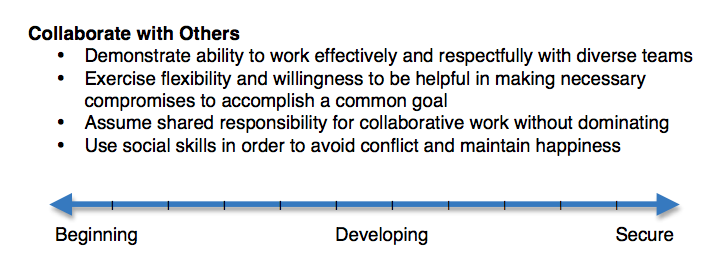
Below is a list of the four behaviors that I look for when assessing my students on "Collaborating with Others."  Under the behaviors is a sliding scale that has ten marks on it where a dot is drawn to represent their current aptitude.  The labels, "Beginning," "Developing," and "Secure" attempt to describe the relative position of the dot that is drawn, in terms that make sense.  I have used this as a self-assessment with my students (which leads into setting appropriate goals), and I also complete one and attach it to their actual report cards.
Picture
I try to explain to parents that the value associated with each of the 32 skills on this 21st Century report card are not as important on their own, rather they are more valuable when compared across all skills.  If a student is getting dots all within the Developing and Secure range, then that student's relative weakness are the skills in the Developing range and a student's relative strengths lie in the Secure range.  When presented like this, parents were more apt to appreciate the data.  When presented strictly as scores on the slider bars, some parents felt the scores were a bit arbitrary and that they didn't know what to do with the data.

When scoring my students, I preferred to look at a skill, look at the behaviors associated with the skill, and determine who in my class was performing at a "10" level.  Generally speaking, no one was at the beginning of the year, but by the end of the year I felt that several were!  After recording the tens, I would go to the nines, etc.  Wherever I ended up, that was the lowest score.  I found myself having trouble giving out ones, twos, and threes at the end of the year, but they were fairly common early on.

I had some great discussions with some of my students about areas that we disagreed on last year.  They thought they were a ten when I thought they were a three, for example.  All I needed to do was point out the behaviors that were listed above.  I would ask the student, "Can you give me an example of a time when you performed that behavior in front of me?"  The answer was often, "No, but I do it all the time!"  I would just reiterate the importance of doing it when the teacher can see it.  At that point on, these students had more motivation to do the behavior because they had to prove me wrong!!!  Either way, I was happy because my students were performing the behaviors that 21st Century students need to perform!  And it's like dominoes.  When one does it, they all start to do it.  :)
4 Comments

Creating Character Trait Word Clouds to Study Synonyms and Antonyms

9/27/2012

6 Comments

 
Picture
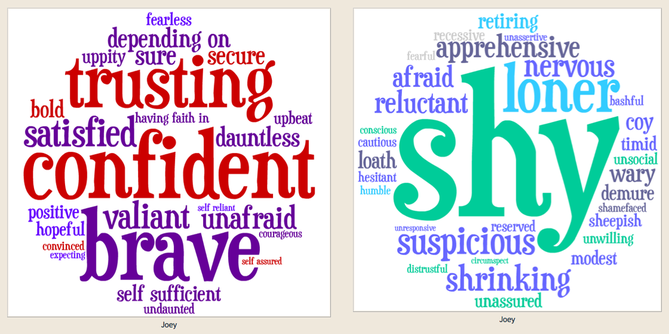
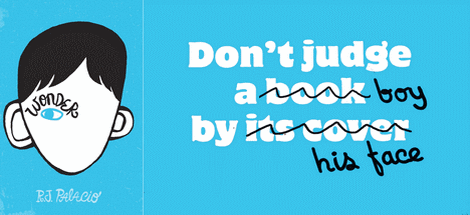
We've been spending a lot of time recently analyzing the various characters in the book Wonder by R.J. Palacio that we've been reading.  I noticed that many of the traits that the students have been listing were very similar and repetitive.  It got me thinking that students are probably limited in the number of character traits that they actually know!  (Duh!)  So...
  1. I found a wonderful list of character traits on Read-Write-Think (click here) that I highlighted.
  2. I taught my students how to use tagul.com, which is a word cloud generator (see images above).
  3. I also taught my students how to use thesaurus.com as a way to find synonyms and antonyms for a word.
  4. Each student chose a word from the list (and its natural antonym) and created a word cloud for it using the synonyms that were listed on thesaurus.com - They clicked on their preferred antonym and used the synonyms from that word's list for their second word cloud.  
  5. Finally, I asked that my students submit their word clouds to me via a form that I posted on our website (scroll down to the bottom of the page to see it).
Here is what we ended up with: http://psolarz.weebly.com/character-traits-thesaurus.html

I think that this 75-minute activity was a good exercise in thinking, because I asked them to delete any words or phrases that they did not know, or did not accurately reflect the definition of the word.   They also had to decide on an antonym that was as close to the opposite of the original word as they could come up with.  Finally, they had to remember (or use their notes that they took) to do all of the technology pieces of the activity.  By the end, my students told me that they were mentally drained, but that they enjoyed the activity.  Exactly what I hoped for!!!

Now we can use this list whenever we are analyzing the character traits of someone in the stories that we read!

6 Comments

Using Wonder by R.J. Palacio to Teach Social Skills and Life Lessons

9/24/2012

9 Comments

 
Picture
I am so glad that I started the year with this book!  It has provided me with such a wonderful reason to have some amazing talks with my students about how we treat others, how to talk with their parents, how to handle their emotions, and how to be the best person that we can be.  These are discussions that I have often had to have as a result of a poor choice someone made, or as a result of something bad happening around us.  Now, I was able to be proactive without sounding preachy!  Thank you Ms. Palacio!

- The Consequences of Bullying:
I have spent quite a bit of time talking with my students about all of the subtle (and more outward) ways that the characters in this book are bullying Auggie: ignoring him, talking behind his back, scheming against him, acting like he has some contagious disease, etc.  It has put common pre-adolescent behaviors into a new context for my kids.  Now they have a stronger understanding that their behaviors and words occasionally have negative consequences and can hurt feelings.  Some of my students have done some of these behaviors in the past, but when they see how it affects Auggie, they feel awful and never want other to experience that feeling.  My students didn't think it was bullying - they didn't mean to hurt anyone, they were just kidding around.  Now they know.

- Communicating with Others and Parents:
There are some wonderful opportunities to talk with the students about why Auggie or Via is having a challenging conversation with their parents - it's due to being in an emotional state when Mom was talking to them.  We talked about the importance of self-monitoring our emotions so we know if we are getting upset, it might be a good idea to ask to talk about it later.  It's nice to know that Auggie's mom is not harassing Auggie, she is just worried about him.  I try to get my students to transfer that to their own life and better understand why their parents do the things they do.  Proper communication is key, and this book allows for me to help my students learn good communication techniques to use with their parents, their peers, and anyone else that they need to communicate with.

- Rules to live by:
These precepts have been taken straight from the book.  They are taught within the story, once per month, and the students enjoy learning about each lesson.  I enjoy the conversation that we have when explaining what each one means.  My students want to live by these rules, and it is nice to keep up in the room as reminders for what we believe in.  Thanks to http://rjpalacio.tumblr.com/post/17457757675/mr-brownes-precepts for typing it all up for me!

SEPTEMBER
“When given the choice between being right or being kind, choose kind.”  —Dr. Wayne Dyer

OCTOBER
“Your deeds are your monuments.”—Inscription on an Egyptian tomb

NOVEMBER
“Have no friends not equal to yourself.” —Confucious

DECEMBER
“Fortune favors the bold.” --Virgil

JANUARY
“No man is an island, entire of itself.” —John Donne

FEBRUARY
“It is better to know some of the questions than all of the answers.” —James Thurber

MARCH
“Kind words do not cost much. Yet they accomplish much.” —Blaise Pascal

APRIL
“What is beautiful is good, and who is good will soon be beautiful.” —Sappho

MAY
“Do all the good you can, by all the means you can, in all the ways you can, in all the places you can, at all the times you can, to all the people you can, as long as you ever can.” —John Wesley’s Rule

JUNE
“Just follow the day and reach for the sun!” —The Polyphonic Spree

Once we are done with this book, we will be doing this lesson.  Some of the world's leaders, corporate heads, celebrities, and education leaders were asked to list the five most helpful quotes they've come to know and use in their daily lives.  We will be analyzing some of them and teaching each other about what they mean.  I will do a blog post about them once we've done the lesson.

Check out this website if you have time as well - http://choosekind.tumblr.com/

9 Comments

Teaching and Assessing 21st Century Skills: Communication

9/21/2012

2 Comments

 
This is part 1 in a series - Teaching and Assessing 21st Century Skills
Not my greatest work, but this video explains Communication as a 21st Century Skill.

Communicating clearly with peers and adults is an important skill for students in the 21st Century for many reasons.  For one, students are doing more small group work than ever before, and therefore need learn how to speak with each other in appropriate, collaborative ways.  Another reason is that companies are asking for college graduates who can hold their own in an interview, speak confidently and professionally, and answer questions clearly yet succinctly.  Too many recent graduates can score high grades on tests, but don't know how to convey a message in an appropriate manner.  It makes sense to work on that in the classroom!

I work with my students on their communication skills all throughout the year.  There are opportunities to work with students one-on-one when they are:
  • interrupting me in a conversation,
  • mumbling or incoherent,
  • shouting out instead of raising their hand,
  • not participating in a classroom discussion, and
  • starting a conversation with me without making eye contact or saying my name.

There are also moments in the day when I get to help students improve their communication while working with their peers.  I tend to jump in whenever students are:
  • arguing with each other,
  • dominating a conversation,
  • being too passive in a conversation,
  • distracted while someone in their group is talking, and
  • interrupting while someone else is talking.

Finally, there are times when I try to teach my students how to be an above-average communicator.  I try to help them:
  • face the speaker,
  • give eye contact,
  • reflectively respond (I think I hear you saying...),
  • make smooth transitions between subjects, and
  • add on to what others are saying.

By learning these skills now, students will have years to practice and get comfortable at communicating with others that they will be more successful in interviews and in the working world.  Not only that, but they will be more confident with their friends and less likely to be worried about public speaking.

In order to assess this skill, I have taken the guidelines from the Partnership for 21st Century Skills.  They are a wonderful resource, and have graciously allowed me to reuse their information on my 21st Century report card located at the end of this post.  In addition, I have used many of the ideas from Habits of Mind by Art Costa in my behavior descriptors. 

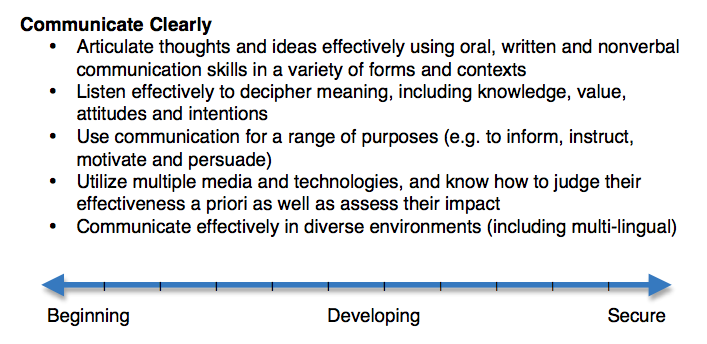
Below is a list of the five behaviors that I look for when assessing my students on "Communicating Clearly."  Under the behaviors is a sliding scale that has ten marks on it where a dot is drawn to represent their current aptitude.  The labels, "Beginning," "Developing," and "Secure" attempt to describe the relative position of the dot that is drawn, in terms that make sense.  I have used this as a self-assessment with my students (which leads into setting appropriate goals), and I also complete one and attach it to their actual report cards.
Picture
I try to explain to parents that the value associated with each of the 32 skills on this 21st Century report card are not as important on their own, rather they are more valuable when compared across all skills.  If a student is getting dots all within the Developing and Secure range, then that student's relative weakness are the skills in the Developing range and a student's relative strengths lie in the Secure range.  When presented like this, parents were more apt to appreciate the data.  When presented strictly as scores on the slider bars, some parents felt the scores were a bit arbitrary and that they didn't know what to do with the data.

When scoring my students, I preferred to look at a skill, look at the behaviors associated with the skill, and determine who in my class was performing at a "10" level.  Generally speaking, no one was at the beginning of the year, but by the end of the year I felt that several were!  After recording the tens, I would go to the nines, etc.  Wherever I ended up, that was the lowest score.  I found myself having trouble giving out ones, twos, and threes at the end of the year, but they were fairly common early on.

I had some great discussions with some of my students about areas that we disagreed on last year.  They thought they were a ten when I thought they were a three, for example.  All I needed to do was point out the behaviors that were listed above.  I would ask the student, "Can you give me an example of a time when you performed that behavior in front of me?"  The answer was often, "No, but I do it all the time!"  I would just reiterate the importance of doing it when the teacher can see it.  At that point on, these students had more motivation to do the behavior because they had to prove me wrong!!!  Either way, I was happy because my students were performing the behaviors that 21st Century students need to perform!  And it's like dominoes.  When one does it, they all start to do it.  :)
2 Comments

Teaching and Assessing 21st Century Skills in the Classroom

9/20/2012

3 Comments

 
Picture
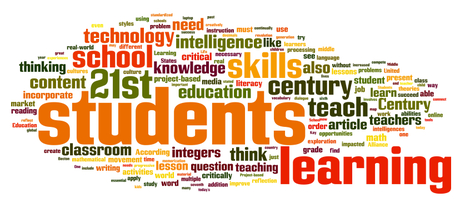
Click on image to go to its source.
In the coming days, I will be blogging about the 21st Century skills that I focus on with my students over the course of a school year.  (Subscribe to my RSS feed on the right so you don't miss any!)  I will try to explain what each skill is, how I address it in my classroom, and how I assess it.  There are 32 total categories (as of today), so there will be a post dedicated to each.  Also, I have created a report card that focuses exclusively on the 32 skills, so I've attached that as a PDF at the end of this post.  It should be applicable to all teachers trying to run a 21st Century classroom.

I tried to create a video for many of these skills over the summer, but man they take a long time to create!!!  :)  Instead of creating new videos for each skill, I will include some video snippets (I'm sure that's the technical term) from interviews with my students last year.  Their explanation of each skill is often better than anything I could come up with!

The 21st Century Skills that we are working on in the classroom (in summary form):
Communicate Clearly
Collaborate with Others
Think Interdependently
Think Creatively
Work Creatively with Others
Implement Innovations
Apply Past Knowledge to New Situations
Think Critically
Make Judgments and Decisions
Ask Questions
Solve Problems
Metacognition (Thinking About Our Thinking)
Reflect and Synthesize
Adapt to Change
Think and Learn Flexibly
Demonstrate Learning Through All Intelligence Pathways
Manage Goals and Time
Be a Risk-Taker
Be Self-Directed Learners
Persist Despite Setbacks
Be Curious
Learn Continuously
Interact Effectively with Others
Work Effectively in Diverse Teams
Find Humor
Manage Projects
Produce Results
Guide and Lead Others
Be Responsible to Yourself and Others
Access and Evaluate Information
Use and Manage Information
Analyze Media
Create Media Products
Apply Technology Effectively

For a more thorough explanation of each skill, read the upcoming blog entries on each skill and the embedded 21st Century report card below.  Don't forget to sign up for my RSS feed on the right side of this page!!!  Thanks!

3 Comments

Having Students Use Temperature Probes to Graph Heat Transfers

9/19/2012

2 Comments

 
Picture
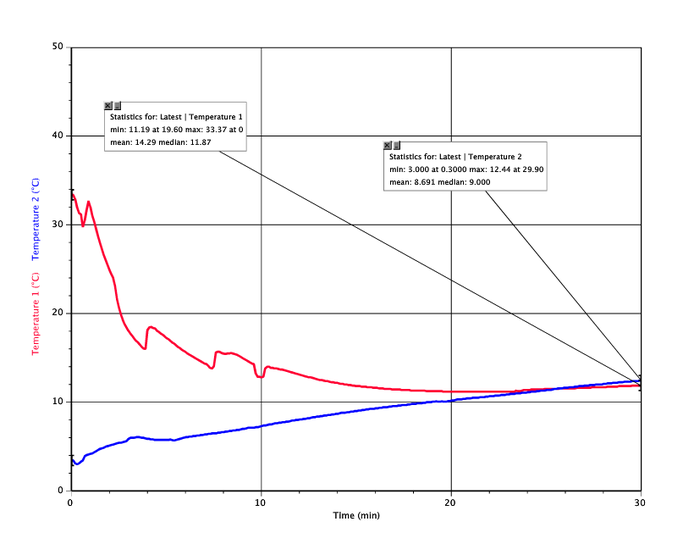
In the picture above, notice how the lines criss-cross towards the end. This was a surprise to all of us and it happened to nearly all of the groups!!! Read on to see our explanation.
Today, our class learned about how heat goes from warmer objects to cooler objects and can pass through various substances.  We started our experiment by putting our hand near a lamp that was NOT turned on and observing that there is no heat to be felt.  When we turned it on, we began to feel heat coming from the bright bulb.  That taught us that heat can be transferred through the air.

Next, we set got into partnerships and set up our lab.  We needed a laptop, two temperature probes, our water-holding device, and some icy cold and hot tap water.  For our water-holding device, I used old cookie dough containers (the big ones) and taped a red Solo cup inside with some amazingly strong double-sided sticky tape.  The inner Solo cup would hold the hot tap water (and a drop of red food coloring), and the outer cookie dough container held the icy cold water (with a drop of blue food coloring).  Before letting kids have their cold and hot water, we predicted what we thought would happen when the two were put together in the containers.  Many thought they would see steam or smoke.  Some just expected the temperatures to even out.

As soon as students were given their filled containers, they rushed to plunge their temperature probes into the respective sections and begin collecting data (we used Logger Lite to record data).  Students quickly noticed that the hot water was cooling down and the cold water was warming up.  We discussed what we thought might happen next.  Some thought they would become the same temperature and then start reversing their temperatures (making an "X" with the line graph).  Some thought it would level off midway between the two starting temperatures.  To our collective surprise, they did begin to reverse themselves!  The cold water ended up becoming warmer than the warm water!  At first, we couldn't explain it scientifically.  Eventually, we decided that the outer water was able to warm up from the heat transferring through the cookie container from the air, but the inner cup was surrounded by water, so it didn't have the same opportunity to be warmed by air (since air changes temperature more quickly/easily than water).  We liked that theory and settled on it.  We had never experienced this phenomenon using standard thermometers, because they are not nearly as accurate as these temperature probes are!!!

At various times during the lesson, I wanted to move on to something else (still related to this lesson) but my students wouldn't let me because they were having so much fun making new discoveries and trying to explain what they were observing.  The discussions they had were very intellectual and made me proud to see them learning so much without the need for a teacher to be teaching!  This lesson had some great critical thinking components, collaborative discussions, and reflection opportunities.  It used guided inquiry as its delivery format, which meant that the students got to do hands-on experimenting with guidance.  They loved it! 
Picture
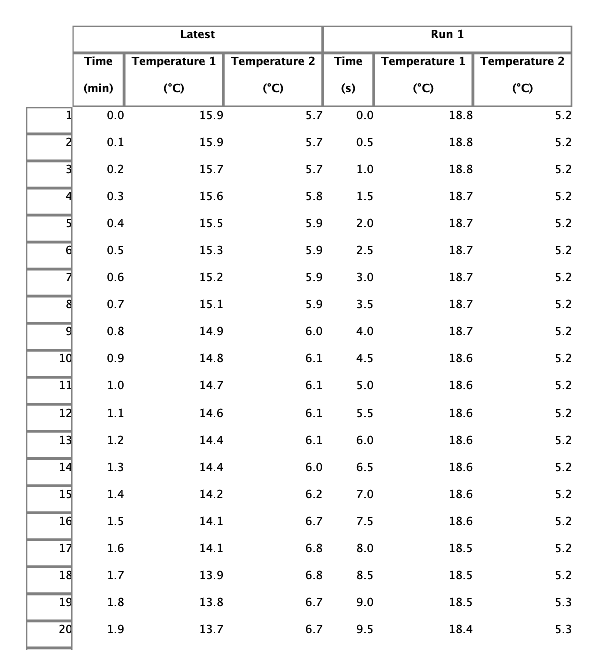
The picture at left shows a screenshot of a portion of one of the data charts that are kept automatically by Logger Lite and our temperature probes!  We are so lucky these days.  :)
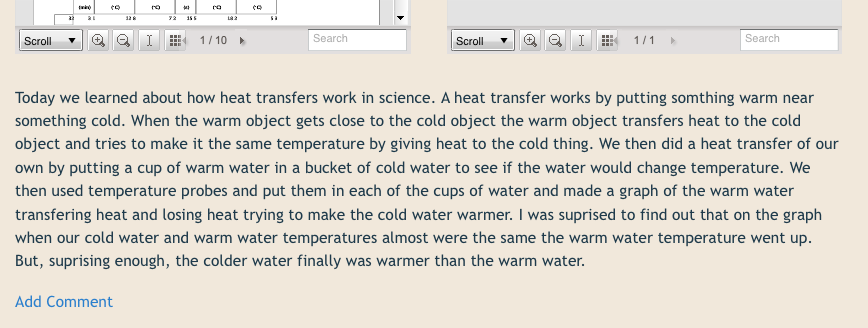
Here is a sample reflection from one of my partnerships.  They did a nice job summarizing what we did and included a statement of surprise at the end!  I'm thrilled!  :)
Picture
As always, hover over "e-Portfolios" above and click on each student's to see their blog posts.  Some students have theirs posted, while others will be finishing during the week.
2 Comments

Teaching Students How to Create Digital Campaign Advertisements

9/18/2012

1 Comment

 
Picture
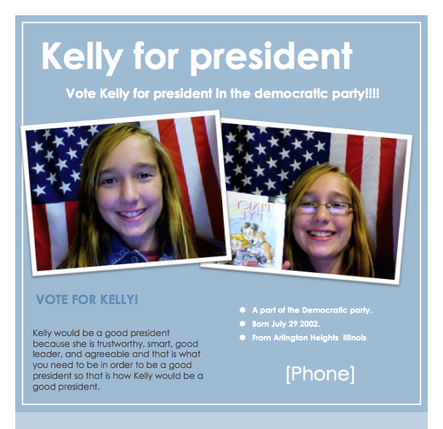
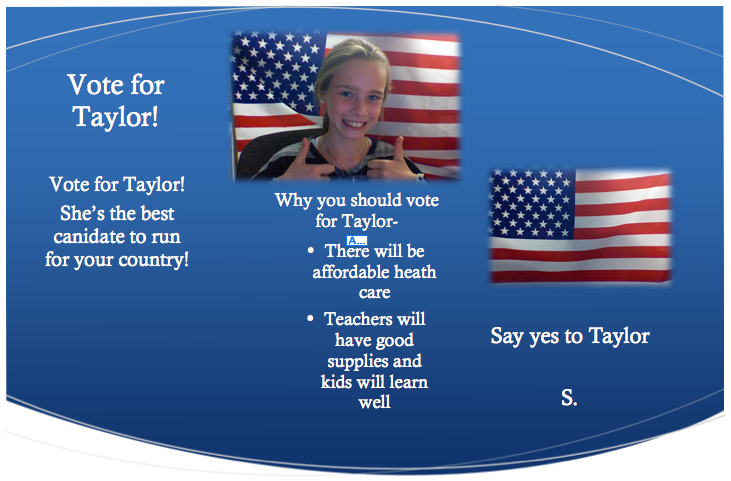
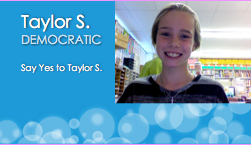
Today was our second day of creating campaign materials that we will eventually use in our Presidential Campaign "Glogs" on Glogster. 

Students are currently creating postcard mailers, 3-fold brochures, business cards, and tear-off posters that support the candidates in our classroom that are running for the presidency.  Soon, we will be creating T-shirts, campaign buttons, lawn signs, bumper stickers, radio ads, and television commercials!  All of these will be put onto our glogs that we create and embed on our blogs!

Creating campaign advertisements is causing my students to think critically about which issues they find important enough to put on their final products.  They are putting it into their own words, and working collaboratively to make each product creative and attention-grabbing.  Students have been using Microsoft Word templates to start their products, and I've seen them use PhotoBooth to create many of the photos that you see within many of the products that I posted on this blog entry.  I've already seen some students doing things on PhotoBooth that I didn't know was possible - I'll be stealing those ideas!!!  :)

The best part of all of this is that I am showing them a few initial steps to get them started, and they are taking it to amazing levels!  They are learning how to ask each other questions instead of only going to me.  I have become a last resort!  This has freed me up to help solve the most complicated issues instead of an endless line of simple concerns.  It has caused my students to feel more confident because they get a chance to be an expert about something! 

This process is taking a lot of class time, but the 21st Century skills that are coming out of it are invaluable!  Everything else this year will become so much easier to them and to me due to these experiences.  This is also setting up a wonderful opportunity for students to edit and revise their products based on my suggestions.  It is much more authentic than a worksheet or a D.O.L. sheet.  So many kids are forgetting capitals and periods these days, but I will remind them how important it is that our campaign advertisements are error-free.  :)

You should see some of these products!  When we are done with our glogs, I will post some of them online in this blog for everyone to see.  For now, feel free to visit each student's e-Portfolio and download some of the files that they have uploaded.  (This process has worked nicely as our version of "Dropbox" by the way.)

Here are a few of our products (currently in progress) so far:

Picture
Picture
1 Comment

Using ePortfolios to Synthesize and Reflect on New Learning

9/17/2012

5 Comments

 
Picture
Today, my students were taught about the aspects of a "fair test" in science.  It was a great way to begin our discussion of our upcoming classroom Science Fair.  We introduced and clarified the following terms: fair test, variables, materials, procedure, data, and results. 

We used a ball bounce investigation as the basis for the instruction.  We learned the importance of keeping variables the same by demonstrating how unfair it is to add force to one ball but not the other, to drop them from different heights, and to drop them on different surfaces (carpet and tile).  Students then had the opportunity to drop two different balls (we used ping pong balls, tennis balls, basketballs, soccer balls, kickballs, super balls, and racquet balls) from eye level and report their results to the class.

It turns out that it was a great lesson to learn about measurement (meters vs. yards, kilometers vs. miles, measuring in centimeters, etc.).  We also worked on the idea that scientists are accurate.  This helped improve our observing skills and overall effort.  Students finally got down on the floor to see where the underside of each ball bounced up to on our meter sticks after lots of reminders about scientific accuracy!

Once all of the data were recorded, students were asked to find mean averages of the results.  I reminded them that they had to add up the data from each trial for each ball and divide by the total number of trials.  They asked about what to do with the remainder, so it was a great opportunity to discuss how remainders can be reported as fractions or decimals within an authentic context.  Finally, I had them subtract the averages to see how much higher one ball bounced than the other.

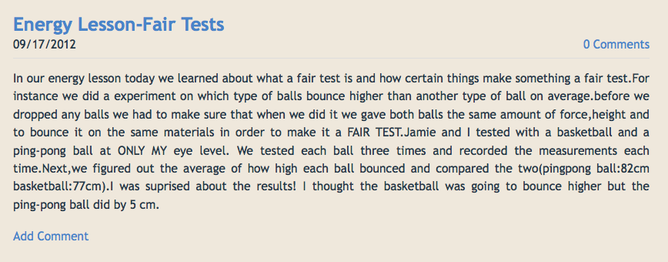
We reported out to the class and I assigned a reflective blog entry as homework.  They needed to tell us a couple things that they learned during the lesson and restate their results.  Here is a sample (they aren't due until Friday, so not everyone has done it yet):

Picture
Now, I just need to do a little work in helping my students remember their periods and capital letters!!!  But overall, I'm happy with a blog entry like this.  There is a well-written summary at the beginning which leads into some specifics on what was learned.  Some details of their particular experiment are given, she expresses an emotion due to her original hypothesis (surprise), and she ends with a statement of her results.  This is solid for the first month of fifth grade! 

If I didn't choose to have my students do this written reflection, I wouldn't have as clear a picture of their learning as I do now.  I asked them to try to wow me with their details and information and I think this student did.  As I look for evidence of prior knowledge being combined with what was learned today, I struggle to find it (other than her incorrect prediction that the basketball would bounce higher than a ping pong ball).  That tells me that most of what was learned today was new to her.  That's great!  I'm glad to see my students learning in my presence!

5 Comments

Explaining Energy Transfers in Toys - On YouTube!

9/15/2012

3 Comments

 
Picture
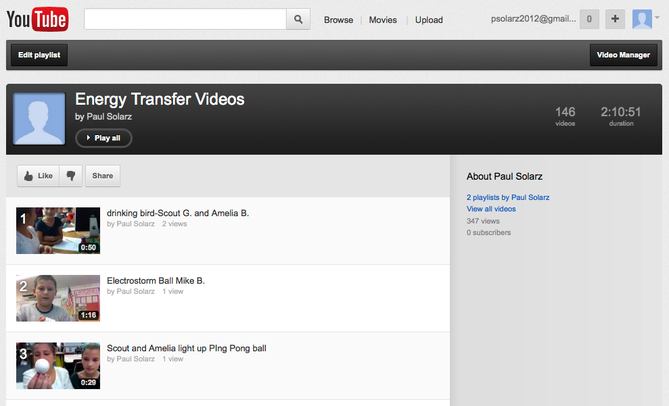
Click on the image to be taken to our YouTube Playlist.
Our class spent some time this week studying the concept of energy transfers in common objects.  We learned about nine different forms of energy including: motion, solar, heat, light, gravitational, elastic, chemical, electrical, and sound energy.  Our big ideas were that "Energy is all around us" and "Energy can take many forms."

We started the lesson by demonstrating how energy transfers work in a solar-powered propeller.  I used a lamp as the energy source and explained the energy transfers as follows: electrical energy comes through the cord of the lamp and gets converted into light energy (and heat energy is a byproduct).  Then, the solar panels convert the light energy into electrical energy which travels through a cord to a motor.  There, it is converted into motion energy as the motor spins the propeller.  One final byproduct is sound energy that is created as the motor rubs against its casing and the propeller cuts through the air. 

I showed my students how to write our energy transfers on a graphic organizer, and explained how they should use arrows to clarify the sequence.  Next, I taught them how to use their laptops to record a video on PhotoBooth where they explained all of the energy transfers as they demonstrated them for their audience.  Finally, I gave them directions for naming and uploading their videos to our classroom YouTube channel.

I randomly partnered my students and sent them on their way!  Instead of having a set time limit at their first station, I observed the kiddos and asked how many people needed more time.  When most were ready, I gave them a two minute warning and then had them rotate.  I did this for all of the rotations and noticed that the amount of time at each station got shorter and shorter as their practice made them more confident. 

As I observed my class, I noticed that many partnerships were having trouble finding all of the energy forms for their toys.  Since this is being used as a summative assessment, I reminded them often to try to make sure that they have all of the energy forms for each station and to use the posters that were hanging up in class as a reminder.  The videos did begin to improve at that point. 

Overall, I am very pleased with their products from these two class periods.  I think that most students enjoyed the opportunity to use technology while teaching the world about science.  I've identified the following 21st Century skills being practiced by the students in this lesson.  Can you identify where the following skills are being demonstrated (or are happening in their minds) in the two videos at the bottom of this post?
  • Communicate Clearly
  • Collaborate with Others
  • Think Interdependently
  • Think Creatively
  • Work Creatively with Others
  • Apply Past Knowledge to New Situations
  • Think Critically
  • Make Judgments and Decisions
  • Solve Problems
  • Reflect and Synthesize
  • Think and Learn Flexibly
  • Demonstrate Learning Through All Intelligence Pathways
  • Manage Goals and Time
  • Be a Risk-Taker
  • Be Self-Directed Learners
  • Be Curious
  • Interact Effectively with Others
  • Work Effectively in Diverse Teams
  • Find Humor
  • Produce Results
  • Guide and Lead Others
  • Be Responsible to Yourself and Others
  • Create Media Products
  • Apply Technology Effectively
(For a complete list of the 21st Century skills that we are working on in class, click here.)

Here are two of our videos.  Try to pick out the 21st Century skills listed above:

To see more of our videos (we made 140 Energy Transfer videos!), click here to view the YouTube Playlist.
3 Comments

Transitional vs. Transformational Uses of Technology - An Aha Moment!

9/13/2012

2 Comments

 
Picture
Today, while watching my students work silently on Grammar games, I gave some thought to the idea of using technology in a transitional ways and transformational ways.  My students were working on games and activities that helped them learn what pronouns were.  These were not much different than the worksheets I used to use, but the online activities helped motivate my students to learn better than a traditional worksheet would have.  Unfortunately, this was a transitional use of technology because I used the technology in a way that was nearly identical to the traditional way of teaching pronouns.  Students were not asked to do anything new - the questions online were nearly the same as the old-fashioned worksheets.

Definition of Transformational use of Technology: A transformational level of student engagement means that students are using technology in a way that transforms the learning process for the student and requires higher-order thinking.  (Source)

Definition of Transitional use of Technology: A transitional level of student engagement with technology means that students are performing a traditional task, but using technology to complete the task.  (Source)

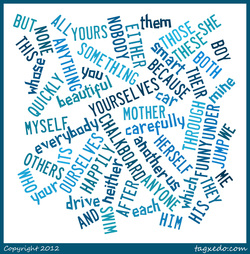
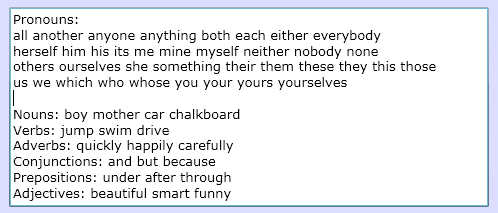
That got me thinking.  What could I have my students do with the technology that would be more transformational?  I could have them create digital posters on Glogster complete with videos, photos, examples, and definitions.  The higher-order thinking could come in as they are creating the videos, photos, and examples.  Or, maybe I could have them create a Tagxedo word cloud with 20-30 pronouns (here's a list of 74) and 10-20 words that aren't pronouns, post it in a blog entry, and have other students comment on which 10 words they didn't think weren't pronouns (as a challenge some could name their parts of speech).  Students would need to use the higher-order thinking skill of classifying.  One final activity I could have my students do is have them rank order the eight parts of speech from most important to least important, complete with an explanation of why they chose that order.  This uses the skills of determining importance and comparing and contrasting.

All of those activities sound like things I want to be doing in my class.  But all of those things require my students to have a basic understanding of each of the parts of speech in order to be successful.  My students don't have that yet.  YET was the key word.  I purposely (although subconsciously) chose a "transitional use of technology" activity because I felt that my students needed some basics before they were ready to do something more transformational!  So maybe transitional uses of technology have a real purpose in learning!  Maybe not all activities need to be transformational!  Huh.

I've been thinking that I needed to avoid transitional activities.  But what I think I've discovered is that I have a slightly different plan of attack these days than I used to.
(1) First, I need to assess my students to see what they know about a subject.
(2) If they know very little, I need to build background knowledge through the most effective means possible (which sometimes means using transitional lessons).
(3) If they know a lot at the beginning (or as soon as they know a lot), I need to provide opportunities to utilize 21st Century skills and higher-order thinking skills as they complete transformational activities (technology-related or not).

So now I understand why I had my kiddos silently plugging away at some fairly tedious grammar games online.  It was to build their background knowledge to a high enough level that we could do some fun activities like the ones I brainstormed above!  Hopefully, we can get done learning about the eight parts of speech soon enough to actually have time to do some fun things with them!  Of course, that is the task of the 21st Century educator.  Making time to do the activities that really matter.  We'll get there soon enough.  :)

My links to the parts of speech games & activities are on this page: http://psolarz.weebly.com/grammar.html
A new part of speech is being added twice per week until we have done them all.  Feel free to use them if your students need to learn the basics!  If you choose to try out any of the transformational activities with them, let me know how they went.  Or if you have any other cool grammar ideas, please let me know - I'd love to try them out!!!

Here's an Answer Key for the image above:

Picture
2 Comments
<<Previous
    Picture
    Picture

    My ePortfolio

    I am Paul Solarz, a 5th grade teacher in Arlington Heights, Illinois who is loving 21st Century Education. Please become part of my PLN on Twitter: @PaulSolarz

    Follow @PaulSolarz
    Tweet

    Archives

    April 2014
    February 2014
    January 2014
    December 2013
    November 2013
    October 2013
    September 2013
    August 2013
    May 2013
    April 2013
    February 2013
    January 2013
    December 2012
    October 2012
    September 2012
    August 2012
    May 2012

    Categories

    All

    RSS Feed

    Tweets by @PaulSolarz
Powered by Create your own unique website with customizable templates.